

What Every Patient Needs to Know Before Surgery
If you smoke and you’re considering All-on-4 dental implants in Rancho Cucamonga, CA—or you’ve already had the procedure—this page is for you. Smoking is the single most controllable risk factor for All-on-4 implant failures. The research is detailed, the stakes are high, and the good news is that you have real options. This guide explains exactly what tobacco does to your implants, whether smokers can still qualify, how long you should quit before surgery, and what Dr. Jay Stockdale’s team recommends for the best possible outcome.
Call our Rancho Cucamonga dental office at (909) 297-1921 to request your consultation. We welcome patients in Rancho Cucamonga, Riverside, San Bernardino, Ontario, or the surrounding Inland Empire.
What Is All-on-4 and Why Does Smoking Complicate It?
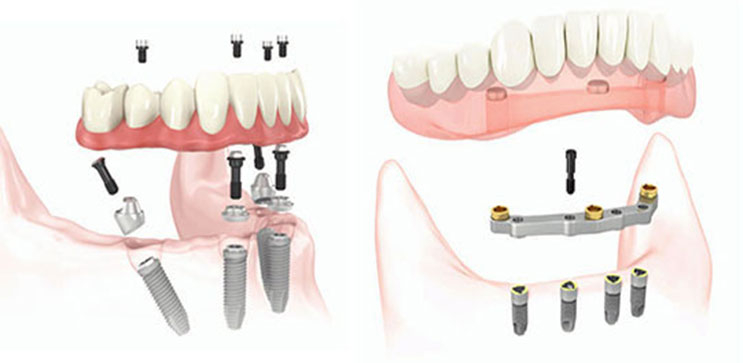
All-on-4® dental implants are a full-arch tooth replacement system that uses just four titanium posts—two straight in front and two angled in the back—to support an entire row of fixed prosthetic teeth. Unlike removable dentures, All-on-4 implants are permanent, bone-anchored, and designed to last decades with proper care.
What makes All-on-4 work and what smoking directly attacks is a biological process called “osseointegration.” After your titanium implants are placed into the jawbone, your body spends the next three to six months slowly growing bone tissue around each post, fusing with it at a cellular level. When osseointegration succeeds, the implants are effectively part of your skeleton. When it fails, the implants loosen, and the entire restoration is at risk.
Tobacco smoke disrupts this process at multiple levels simultaneously: it starves healing tissue of oxygen, weakens your immune response, degrades bone density, and creates a bacterial environment hostile to successful integration. For All-on-4 patients specifically, failure of even a single implant can compromise the entire four-post arch—meaning the stakes are higher than with a single-tooth implant.
How Much Does Smoking Raise Your Risk of All-on-4 Failure?
This isn’t an abstract concern. Multiple large-scale peer-reviewed studies now paint a consistent picture of exactly how much risk smoking adds.
- 2.59× Higher odds of early implant failure in smokers vs. non-smokers (Journal of Dentistry, 2024) (59,246 implants reviewed)
- 59% Increased risk of early implant failure for smokers overall (Fan et al., J. Dent., 2024)
- 2.23× More likely to experience implant failure (2020–2024 literature update) (MDPI Dentistry, Sept. 2024) (29,519 implants)
A landmark 2021 meta-analysis covering 292 published studies—analyzing over 150,000 individual implants—found the odds of implant failure for smokers were 2.4 times higher than for non-smokers. The most recent 2024 literature update, covering studies from 2020 through 2024 specifically, confirms that finding hasn’t improved: smokers remain significantly more likely to experience implant failure than non-smokers.
There’s also a dose-response relationship that matters: the more cigarettes you smoke per day, the higher your personal failure risk. Research consistently finds that bone loss around implants in smokers averages more than double that of non-smokers over time—1.5 mm versus 0.7 mm annually—a difference that compounds dramatically over the years.
How Tobacco Damages the Healing Process: The Science Explained
Understanding why smoking causes these numbers helps you understand what you’re working against—and why timing your quit matters.
Nicotine Restricts Blood Flow and Oxygen Delivery
Nicotine causes vasoconstriction, a narrowing of blood vessels, which directly limits the flow of oxygen-rich blood to your surgical site. Healing tissue depends on a steady supply of oxygen and nutrients to regenerate. When that supply is cut off or reduced, cells struggle to repair, new bone forms more slowly, and the soft tissue surrounding your implants remains fragile longer than it should be. Carbon monoxide in cigarette smoke compounds this by binding to hemoglobin in your blood, further reducing its ability to carry oxygen to healing tissues.
Smoking Suppresses Your Immune System
Your immune system is your frontline defense against the bacteria that naturally exist in your mouth. Tobacco chemicals compromise that defense. White blood cells become less effective, inflammation responses become dysregulated, and your body’s ability to fight off infection around your implant sites is measurably weakened. This is why smokers are significantly more prone to bacterial infections that lead to implant complications.
Bone Density and Regeneration Are Compromised
Nicotine and other tobacco chemicals interfere directly with osteoblasts—the cells responsible for building and regenerating bone tissue. Over time, this leads to lower bone density around your implant sites and slower, less complete osseointegration. Smoking also impairs the body’s ability to respond to bone grafting procedures, which are sometimes needed before or during implant surgery. Patients who smoke face a significantly higher rate of bone graft failure, which in turn delays or prevents implant placement entirely.
Dry Mouth and Bacterial Growth
Smoking reduces saliva production and dries out oral tissues. Saliva is your mouth’s natural cleaning mechanism—it neutralizes acid, washes away bacteria, and delivers antimicrobial compounds to your gum line. Without adequate saliva flow, harmful bacteria accumulate faster around the base of your implants, creating the conditions for infection, inflammation, and tissue breakdown.
Peri-Implantitis: The Smoking-Linked Infection That Can Destroy Your Implants
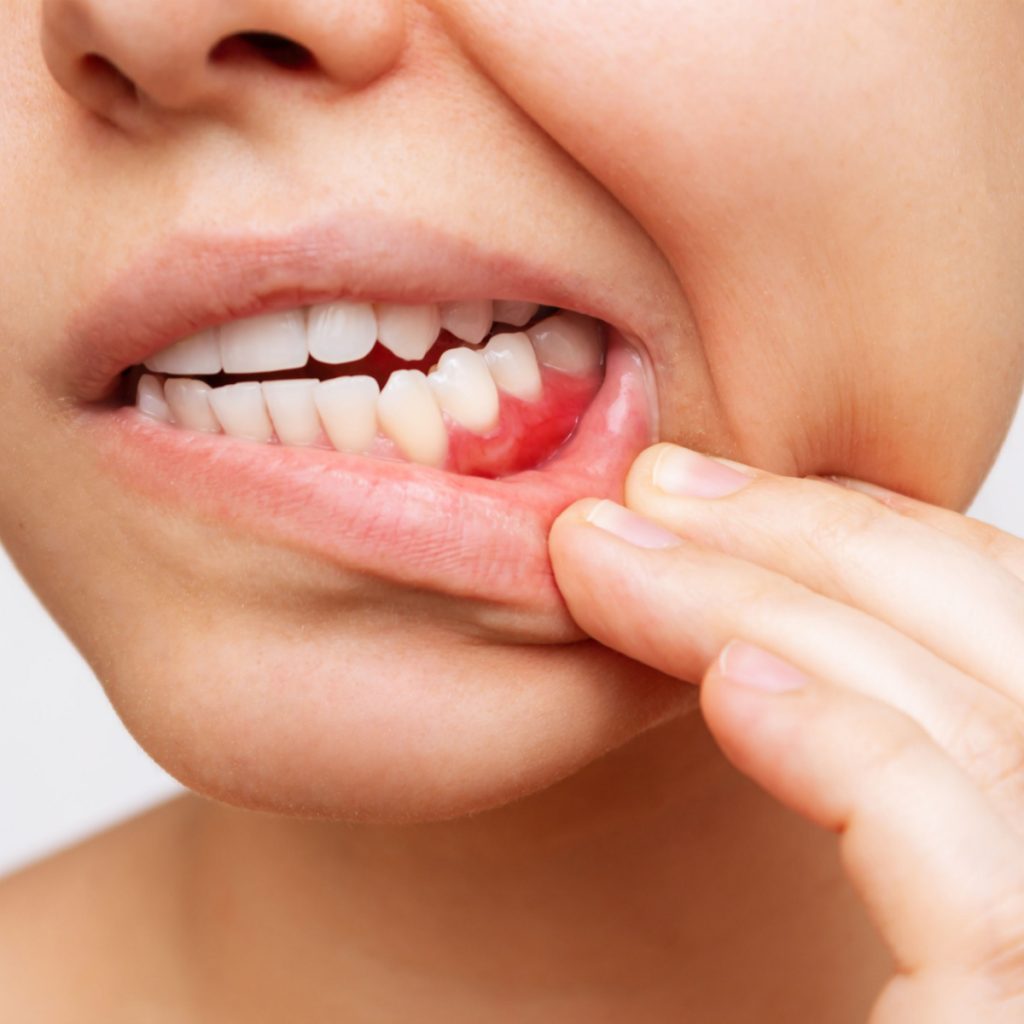
Peri-implantitis is an infection of the tissues surrounding a dental implant. It begins as peri-implant mucositis, a reversible inflammation of the soft tissue, but when left untreated, it progresses into the bone itself, causing irreversible bone loss and eventual implant failure. Think of it as gum disease, but specifically targeting your implant sites.
Smokers are significantly more susceptible to peri-implantitis for every reason discussed above: Impaired immune response, reduced blood flow, elevated bacterial load, and compromised bone regeneration all combine to create a perfect environment for this infection to take hold and accelerate.
Warning signs of peri-implantitis to watch for:
- Bleeding or swollen gums around an implant
- Persistent bad breath that doesn’t resolve with brushing
- A feeling that your implant is loose or shifting
- Visible gum recession exposing the implant post
- Dull aching or pressure at an implant site
- Pus or discharge around the implant base
If you’re a smoker and notice any of these signs, don’t wait. Peri-implantitis is far easier to treat in its early stages. Call Renaissance Dental Care immediately at (909) 297-1921.
Treatment for advanced peri-implantitis may involve surgical intervention, bone grafting, laser therapy, or, in severe cases, removal of the affected implant. Prevention, primarily through smoking cessation and excellent oral hygiene, is dramatically more effective and far less costly than treatment.

Bone Loss and Jaw Structure: The Long-Term Threat Smokers Face
All-on-4 implants rely entirely on the integrity of your jawbone. The four titanium posts need dense, healthy bone to anchor into—without it, osseointegration is compromised from the very first day of surgery.
Tobacco smoking affects the bone metabolism systemically, meaning the damage isn’t limited to your mouth. Nicotine reduces the production of osteocalcin (a protein essential to bone formation), elevates levels of inflammatory markers that accelerate bone resorption, and impairs the vascular supply that nourishes bone tissue. Over time, smokers lose jawbone at roughly twice the rate of non-smokers following implant placement.
This is particularly problematic for All-on-4 patients because significant bone loss around one or more of the four implants can destabilize the entire prosthetic arch. In some cases, additional procedures—including bone grafting or ridge augmentation—become necessary just to maintain what was initially placed. Ask our team about your All-on-4 candidacy and whether preparatory procedures might be recommended for your situation.
Aesthetic Complications: What Smoking Does to Your New Smile
You’ve invested in All-on-4 because you want to look and feel good. Smoking actively works against that goal in several visible ways:
| Aesthetic Issue | What Happens | Reversible? |
| Gum recession | Soft tissue pulls back from the implant base, exposing metal posts and creating an unnatural appearance | Difficult to reverse without surgery |
| Staining | Nicotine yellows prosthetic teeth over time, diminishing the brightness of your new smile | Partially, with professional cleaning |
| Swollen gum tissue | Chronic inflammation around implants creates a puffy, unhealthy gumline appearance | Yes, if the infection is treated early |
| Asymmetrical healing | Uneven tissue recovery can lead to visible discrepancies in how the gumline frames your teeth | Sometimes, with additional treatment |
Beyond aesthetics, gum recession exposes the junction between the implant and the prosthetic crown—an area that’s difficult to clean and highly vulnerable to bacterial colonization. Once a recession begins, it tends to progress without intervention.
What About Vaping and E-Cigarettes? Are They Safer for Implants?
This is one of the most common questions we hear from patients, and it deserves a straight answer: vaping is not a safe alternative when it comes to dental implants.
E-cigarettes and vaping devices still deliver nicotine—the chemical responsible for vasoconstriction and reduced blood flow to healing tissues. A 2023 peer-reviewed meta-analysis in the Journal of Dentistry confirmed that e-cigarette use produces measurably negative effects on clinical, radiographic, and immunological parameters around dental implants. Specifically, vaping individuals show elevated levels of inflammatory markers — including interleukin-1β — in the fluid around their implants, comparable to conventional cigarette smokers. Elevated interleukin-1β is directly linked to accelerated alveolar bone loss.
There’s also the dry mouth factor: vaping commonly causes oral dryness and tissue irritation, both of which impair healing and increase susceptibility to bacterial infections at implant sites.
Bottom line on vaping: If you vape and you’re planning All-on-4 surgery, treat your vaping habit the same way you would treat smoking. Discuss it openly with Dr. Stockdale before your procedure. Most specialists recommend stopping vaping for at least two months before surgery and throughout the osseointegration period. The research on e-cigarettes and dental implants is still emerging, but current evidence does not support the idea that switching to vaping protects your implants.

Can Smokers Still Get All-on-4 Dental Implants in Rancho Cucamonga?
Yes, smoking is a significant risk factor for implant failure, but it is not an absolute contraindication. Smokers can and do successfully complete All-on-4 treatment. What matters is honest communication with your provider, realistic expectations, and a genuine commitment to the steps that improve your odds.
At Renaissance Dental Care in Rancho Cucamonga, CA, Dr. Stockdale evaluates every patient individually. When a smoker comes in for an All-on-4 consultation, the assessment typically covers:
- Current bone density and jaw volume via 3D cone beam CT imaging
- Existing gum health and any signs of active periodontal disease
- Smoking history: duration, intensity, and current daily cigarette count
- Overall medical history, including conditions like diabetes that compound smoking-related risks
- Willingness to commit to a cessation plan and enhanced oral hygiene protocol
Depending on your individual situation, Dr. Stockdale may recommend preparatory procedures, including bone grafting or treatment for existing gum disease, before proceeding with implant surgery. Some heavy or long-term smokers may require additional planning time before they’re cleared as good candidates for All-on-4.
If you’re searching for an All-on-4 dentist near you in Rancho Cucamonga, Riverside, San Bernardino, Ontario, or Diamond Bar, the most important first step is a thorough consultation—not a one-size-fits-all answer online. Call us at (909) 297-1921 to schedule yours, or request an appointment online.
How Long Should You Quit Smoking Before All-on-4 Surgery?
The clinical evidence points to a clear hierarchy: the longer you stop before surgery, the better your outcomes. Here’s what the research and clinical guidelines tell us:
1 Week Before Surgery — Minimum Threshold
Clinical protocols suggest stopping at least one week prior to allow reversal of increased platelet adhesion and elevated blood viscosity caused by nicotine. This is the absolute floor—not the goal. Even after one week, your body starts improving blood flow and tissue oxygenation.
6–8 Weeks Before Surgery — Recommended
Most implant specialists, including the team at Renaissance Dental Care, ask patients to stop smoking 6 to 8 weeks before implant placement. By this point, blood flow has measurably improved, the immune system has begun to recover, and bone tissue begins showing normal remodeling patterns. This window gives your body genuine preparation time.
3 Months Before Surgery — Optimal
Some periodontists recommend stopping three months ahead of surgery for maximum benefit. At this point, soft tissue health is substantially improved, and the vascular changes driven by chronic nicotine exposure have largely reversed. Studies show implant success rates climb significantly with each additional smoke-free week pre-surgery.
After Surgery: Stay Smoke-Free for at Least 6 Months
Osseointegration, the critical bone-fusing process, takes three to six months to complete. Smoking during this window directly interferes with it. Renaissance Dental Care strongly advises patients to remain smoke-free for the entire osseointegration period. Even after initial healing, continued smoking increases the long-term risks of peri-implantitis, bone loss, and eventual implant failure. Quitting for good gives your All-on-4 investment its best chance of lasting a lifetime.
Good news for former smokers: Research shows that implant success rates for patients who have quit smoking for five or more years closely approach those of lifelong non-smokers. It’s never too late to quit, and your body begins recovering from tobacco damage within days of your last cigarette.
How Smoking Causes Peri-Implantitis and Endangers All-on-4 Implants
1. Be Honest With Your Dentist — All of It
Disclose your full smoking history: how long you’ve smoked, how many cigarettes per day, and whether you also vape. This is not information that will disqualify you—it’s information that allows Dr. Stockdale to build a treatment plan tailored to your actual biology. Patients who downplay their smoking history are the ones most likely to encounter avoidable complications.
2. Create a Quit Plan Before Your Consultation
The California Department of Public Health (CDPH) offers free cessation resources, including coaching and nicotine replacement options, through the California Smokers’ Helpline at 1-800-NO-BUTTS. Nicotine replacement therapies—patches, lozenges, and prescribed medications like varenicline—are effective tools that your medical provider can help you access. Starting your quit plan before your implant consultation means you arrive at surgery with weeks of reduced nicotine exposure already behind you.
3. Consider Bone Grafting if Needed
If your jawbone has been compromised by years of smoking—reduced density or resorption—bone grafting or ridge augmentation may be recommended before implant placement. While this adds steps and time to your treatment, it meaningfully improves the foundation your implants will be anchored into. Your All-on-4 treatment plan may include this as a preparatory phase. Learn more about financing options if cost is a consideration.
4. Commit to Exceptional Oral Hygiene — Non-Negotiable for Smokers
Smokers face a higher bacterial burden in their mouths and a reduced ability to fight it off. That gap has to be closed with diligent hygiene. This means:
- Brushing twice daily with a soft-bristle brush and non-abrasive toothpaste
- Daily interdental cleaning around implant sites (water irrigator or soft picks)
- Antimicrobial mouthwash as directed—ask Dr. Stockdale which formulation is right for you
- Avoiding tobacco and high-sugar foods that accelerate bacterial growth
- Professional cleanings every 3–4 months rather than the standard 6-month interval
Review the full postoperative All-on-4 care guidelines from our team for a complete checklist.
5. Schedule More Frequent Check-Ups—Early Detection Is Everything
Peri-implantitis and early bone loss are treatable when caught at the first signs. For smokers, the standard 6-month recall schedule simply isn’t enough. Dr. Stockdale recommends quarterly monitoring for at least the first two years after All-on-4 placement—more often if any symptoms arise. The cost of a preventive check-up is trivially small compared to the cost of treating advanced peri-implantitis or replacing a failed implant.
Frequently Asked Questions
Can secondhand smoke affect my All-on-4 implants?
There is evidence that sustained secondhand smoke exposure can negatively affect healing and tissue health around implants. If you live with someone who smokes, ask them to smoke outdoors and ensure good ventilation in shared spaces, particularly during your recovery period. It’s worth raising this with Dr. Stockdale at your consultation so your care plan accounts for your home environment.
What happens if I smoke right after getting All-on-4 implants?
Smoking immediately after surgery dramatically raises your risk of implant failure. The first 72 hours are the most critical—blood clots and early tissue formation are fragile and highly sensitive to nicotine-induced vasoconstriction. Smoking during the full osseointegration window (three to six months post-surgery) continues to impair bone fusion and elevate your peri-implantitis risk. Resuming smoking even after healing has completed keeps your long-term failure risk elevated compared to non-smokers.
Is vaping safer than smoking for dental implant patients?
No, not when it comes to dental implant health. E-cigarettes still deliver nicotine, which causes vasoconstriction and reduces blood flow to healing tissue. A 2024 peer-reviewed meta-analysis confirmed that vaping produces measurably negative effects on the tissues surrounding dental implants, with elevated inflammatory markers linked to bone loss. If you vape, treat it the same as smoking: stop before surgery and stay vape-free throughout recovery.
How long do I need to quit smoking before All-on-4 surgery?
Clinical guidelines suggest stopping at a minimum of one week before surgery, but 6–8 weeks is the recommended preparation window for meaningful healing improvement. Stopping three months ahead is considered optimal by many periodontists. After surgery, you should remain smoke-free for the entire osseointegration period—at least three to six months—to give your implants the best chance of fully integrating with your jawbone.
If I quit smoking, how long until my implant success rate improves?
Your body begins recovering within days of your last cigarette—blood flow improves measurably within 48–72 hours. Over weeks and months, immune function recovers, tissue oxygenation normalizes, and bone remodeling patterns begin to approach those of non-smokers. Research shows that patients who have been smoke-free for five or more years have implant success rates that closely approach those of lifelong non-smokers. The improvement is real and begins immediately.
Does smoking affect the cost or financing of All-on-4 treatment?
Smoking may add costs indirectly—for example, if bone grafting is required before implant placement or if more frequent monitoring appointments are needed post-surgery. However, the All-on-4 procedure itself is priced the same regardless of smoking status. Renaissance Dental Care offers financing options to make treatment accessible.
What All-on-4 sedation options are available for anxious smokers?
We offer multiple dental sedation options to keep you comfortable throughout your All-on-4 procedure. Many of our patients who smoke also experience dental anxiety—that’s completely understandable, and it’s something we address as part of your treatment plan.
Ready to Protect Your Smile? Start Here.
Smoking raises the stakes on All-on-4—but it doesn’t close the door. Dr. Stockdale and the Renaissance Dental Care team work with smokers every day to build personalized treatment plans that give implants the best possible chance of long-term success. The first step is an honest conversation. Call our Rancho Cucamonga dental practice at (909) 297-1921 to schedule your consultation. Serving Rancho Cucamonga, Riverside, Ontario, San Bernardino, Diamond Bar, and the Inland Empire.